Blog
Plain answers to the questions facilities managers and building owners ask about dampers, from what they are to what happens when one fails. For prices, see the cost guide; for the law, the regulations page; for the test itself, fire damper inspection.
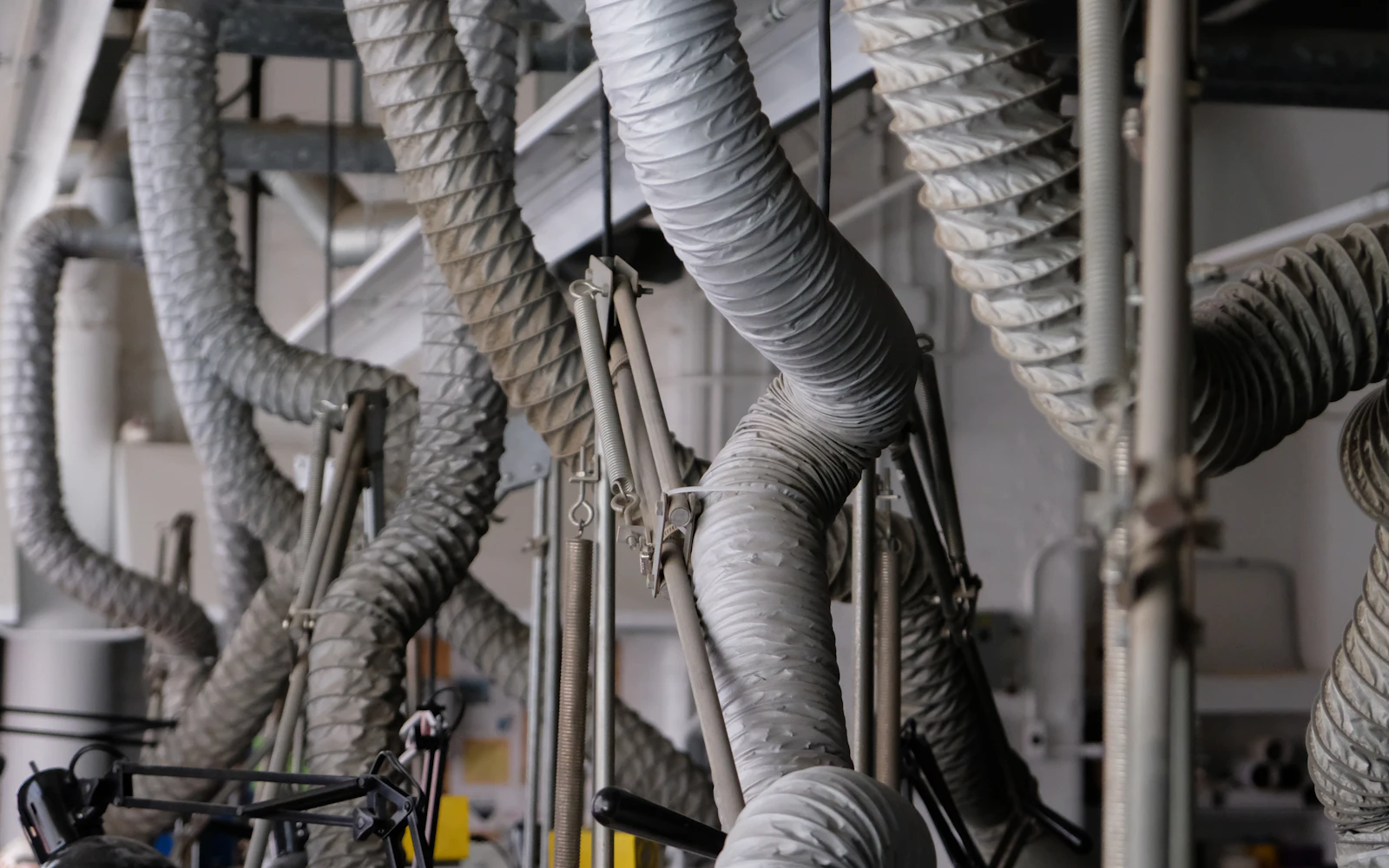
What is a fire damper, and where are they hidden in your building?
A fire damper is a shutter inside a ventilation duct that closes when it gets hot or gets a signal, so fire cannot spread through the duct from one part of the building to the next. Most sit above ceilings where ducts cross fire-resisting walls and floors.
- Rules
How often should fire dampers be tested?
At least once a year, starting when the damper is installed. Dampers in dusty or greasy ductwork may need testing more often, and health buildings can use a planned sampling cycle agreed with their fire safety team.
- Damper types
Intumescent fire dampers, and why they cannot be drop tested
An intumescent fire damper is a block of material that swells and seals the duct when heated. With no moving parts there is nothing to drop, so it gets a visual inspection of its condition, fixing and cleanliness, and the report should say so clearly.
- Testing
What happens during a fire damper drop test, from release to reset
The tester reaches the damper, checks its fixing and condition, releases the fusible link so the blades fall shut, confirms it closes and latches fully, then reopens it, refits the link and records the result with photos.
- Access
Our fire dampers have no access panels. What are the options?
A damper without access cannot be tested, so the first step is a report that lists every no-access damper. The usual fix is two panels, one in the duct and one in the ceiling or shaft, fitted by someone who keeps any fire rating intact, ideally in the same visit as other repairs.
Tell us where the dampers are
Give us the building postcode and who to speak to. A damper count, a recent report or a ceiling plan all help the firm price it, but none of that is needed to start.
We look for a damper testing firm that works in your area and let you know which one before anything else happens. Your details reach that firm only once you agree, and there is no charge to you.
Your enquiry has arrived.
From here:
- We pick a damper testing firm for the building's area and send its name to your inbox.
- You reply yes or no. Nothing is shared before your reply.
- The firm phones or emails about damper numbers, drawings and access times, then prices the job in writing.